
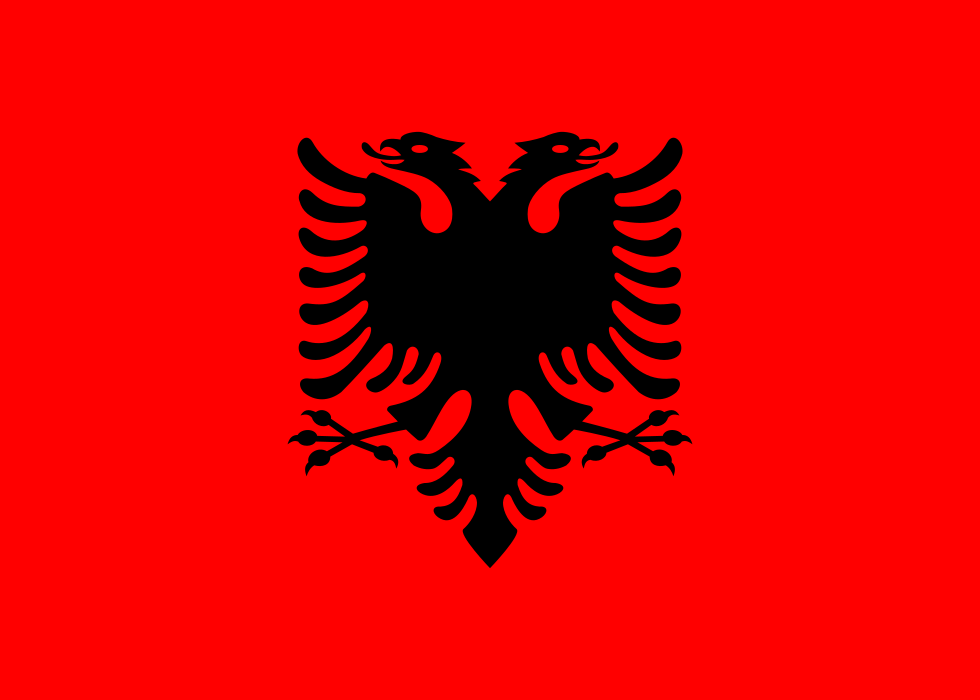
“Ti, Shqipëri, më jep nder, më jep emrin Shqiptar”
“You, Albania, give me honor, give me the name Albanian”
Quick Overview
- Official Name: Republic of Albania
- Nickname: The Land of the Eagles
- Capital: Tirana
- Important Cities: Durrës, Elbasan, and Vlora
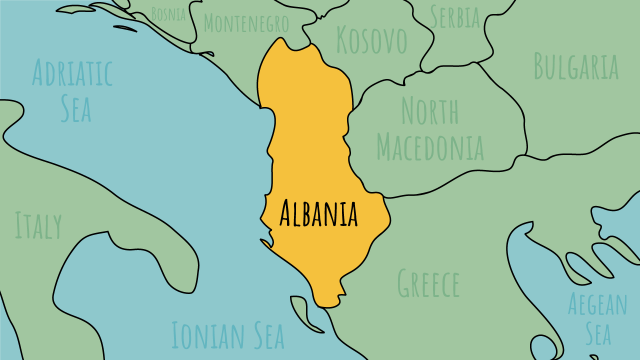
- Shares a border with: Serbia, Montenegro, Greece, North Macedonia and Kosovo.
- Coastlines: Adriatic Sea, Ionian Sea
- Area: At about 29,000 square miles, Albania is bigger than West Virginia, but smaller than South Carolina.
- Population: About 3 million people live in Albania. That’s about the same number of people that live in Arkansas.
- Languages: Albanian
- Age: After centuries of Turkish rule, Albania first became an independent country in 1912, but then was invaded and occupied by Italy in 1939. After World War II, Albania gained its independence again as a communist country. In 1992 democracy was restored.
Photo Gallery
Click an image to open a full-screen slideshow.
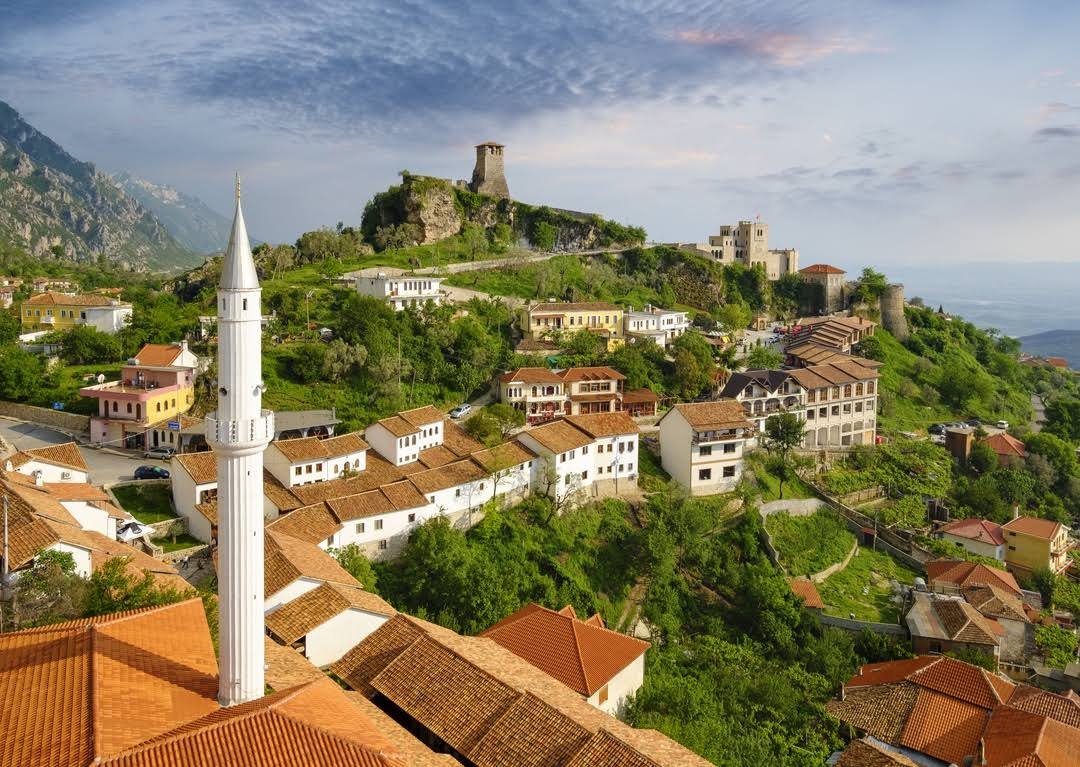
Vlorë hillside with buildings. Photo courtesy of Google Maps 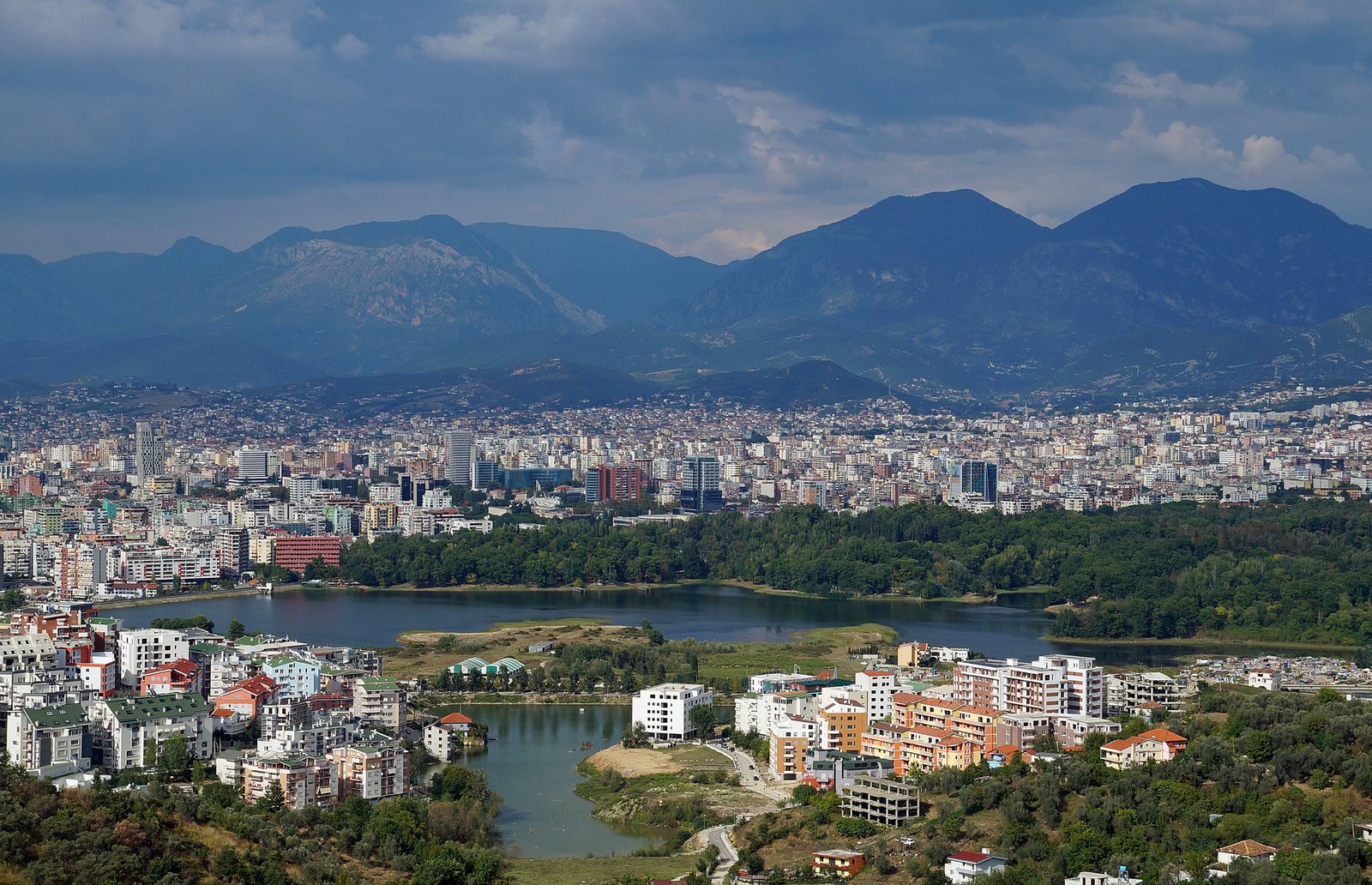
Tirana. Photo by Albinfo 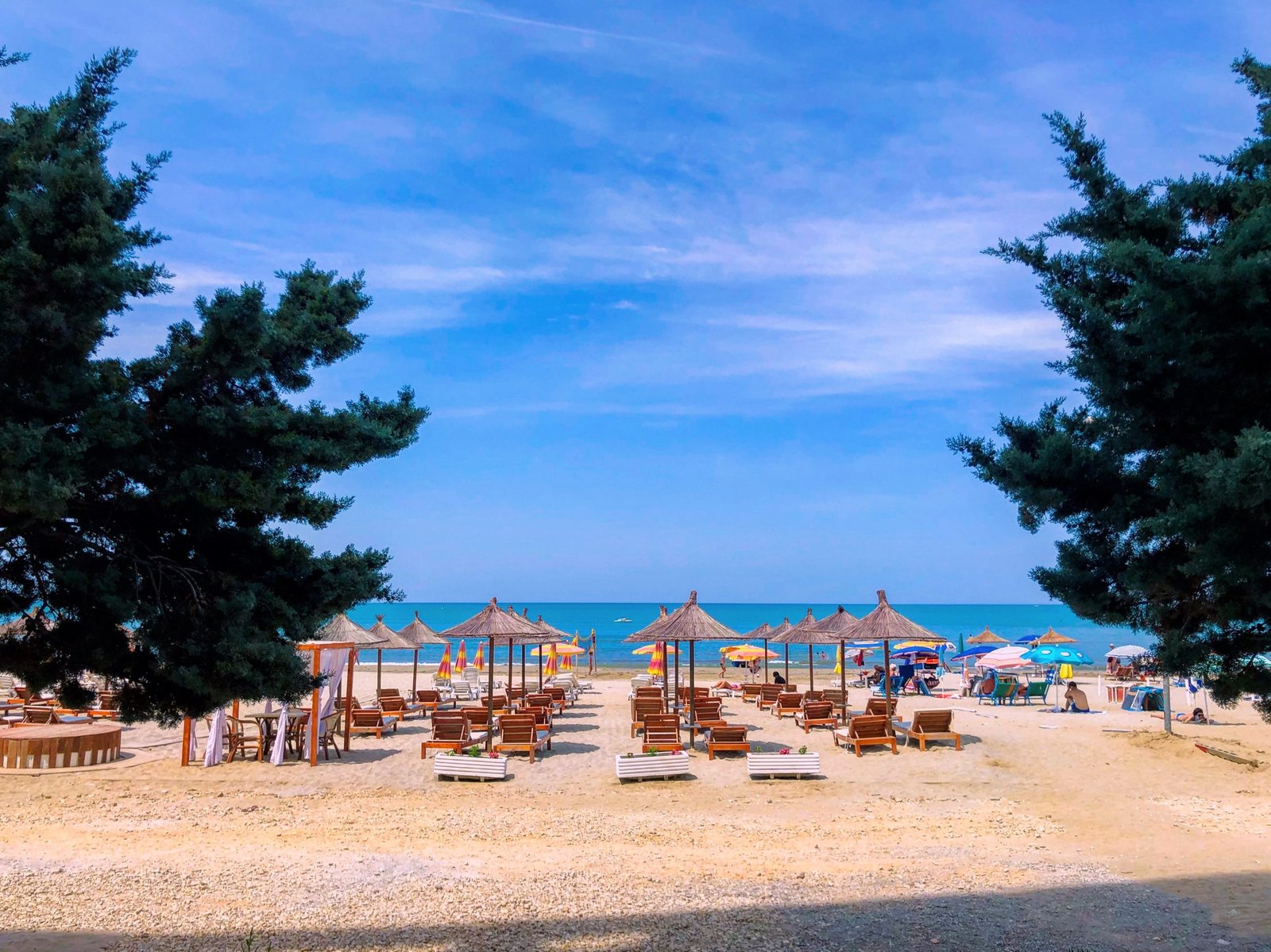
Beach in Durrës. Photo by erggis. 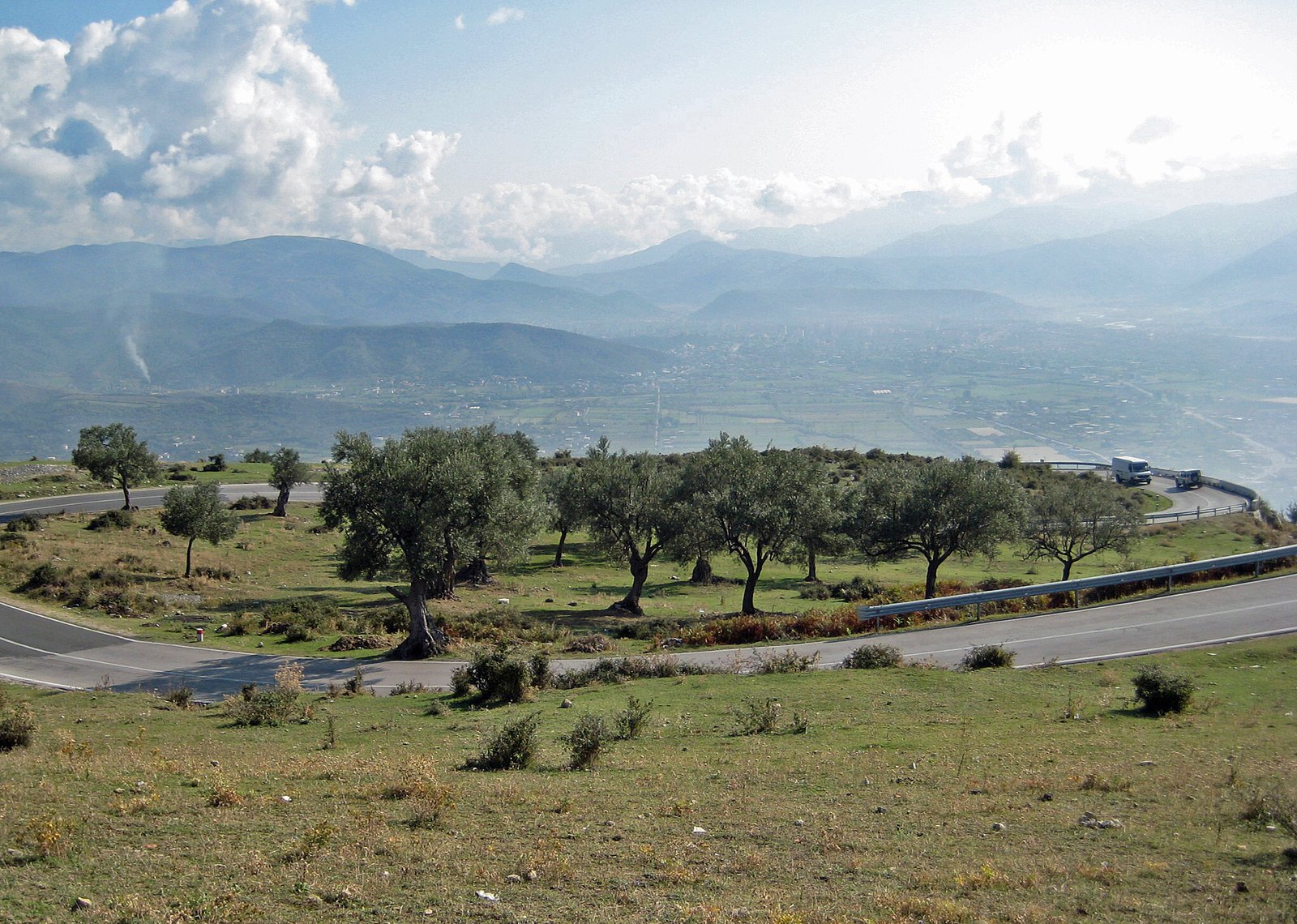
Krraba pass. Photo by albinfo 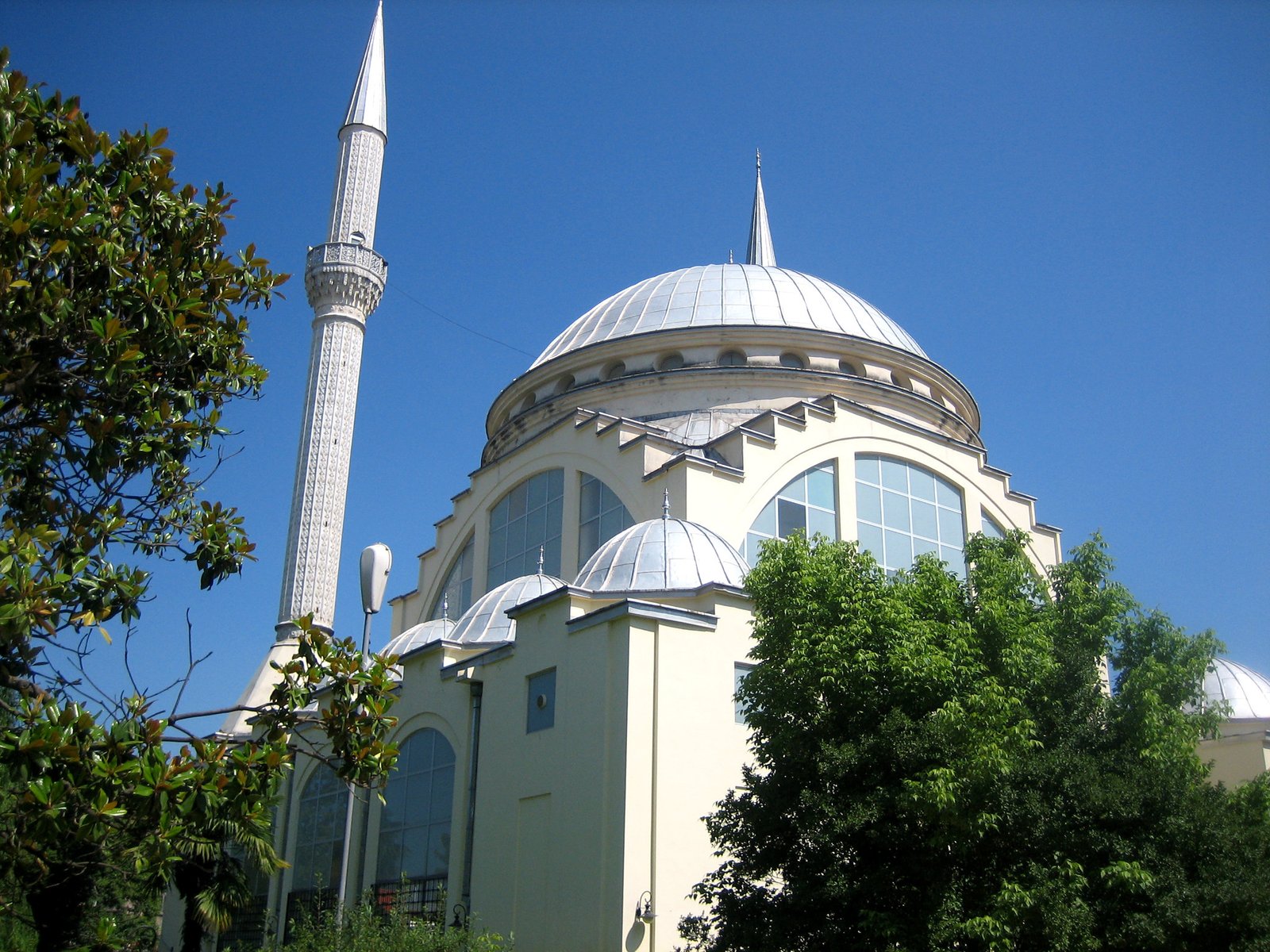
Al Zamil Mosque of Shkodër, Albania. Photo by David Dufresne 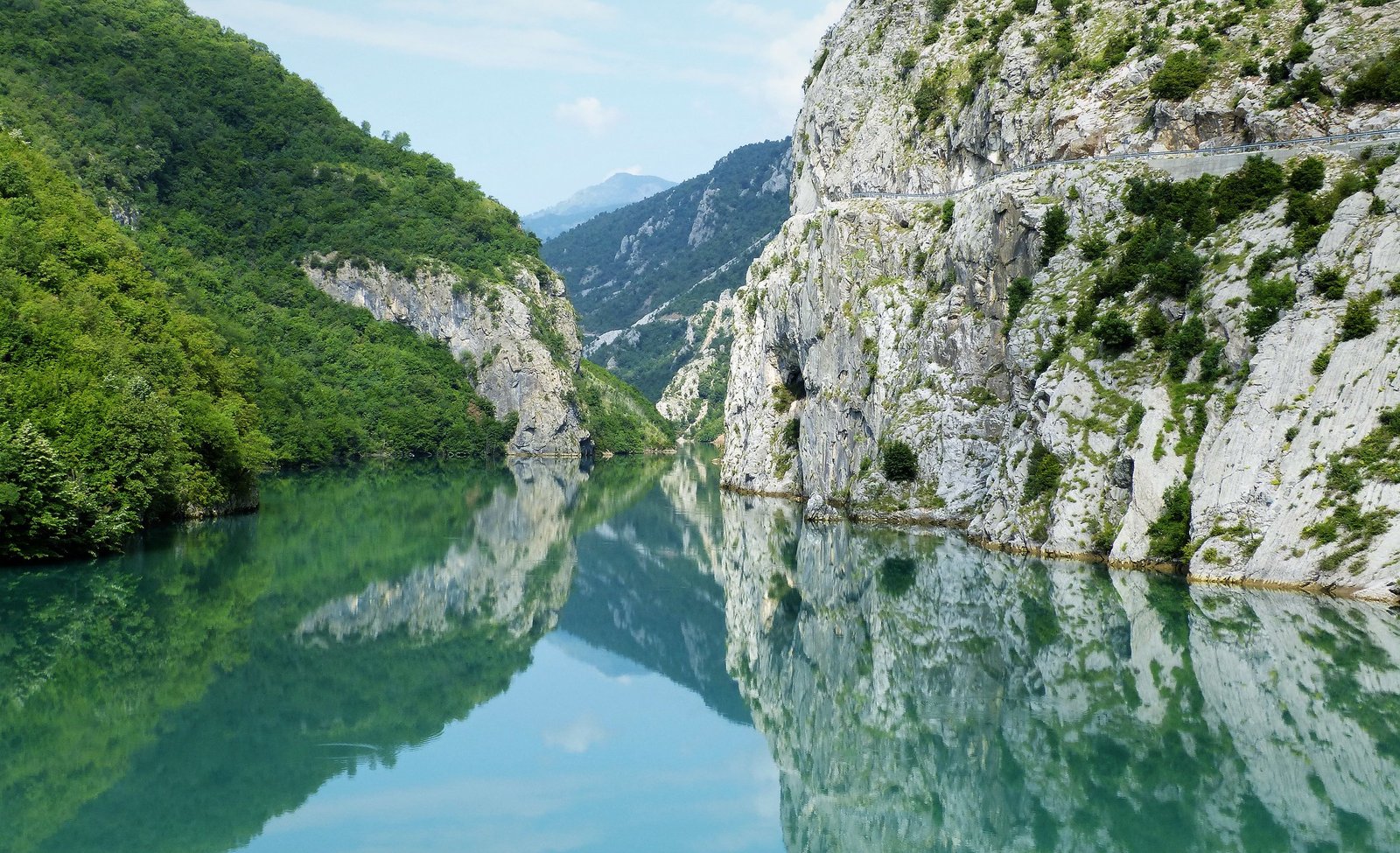
Koman Ferry. Photo by gailhampshire 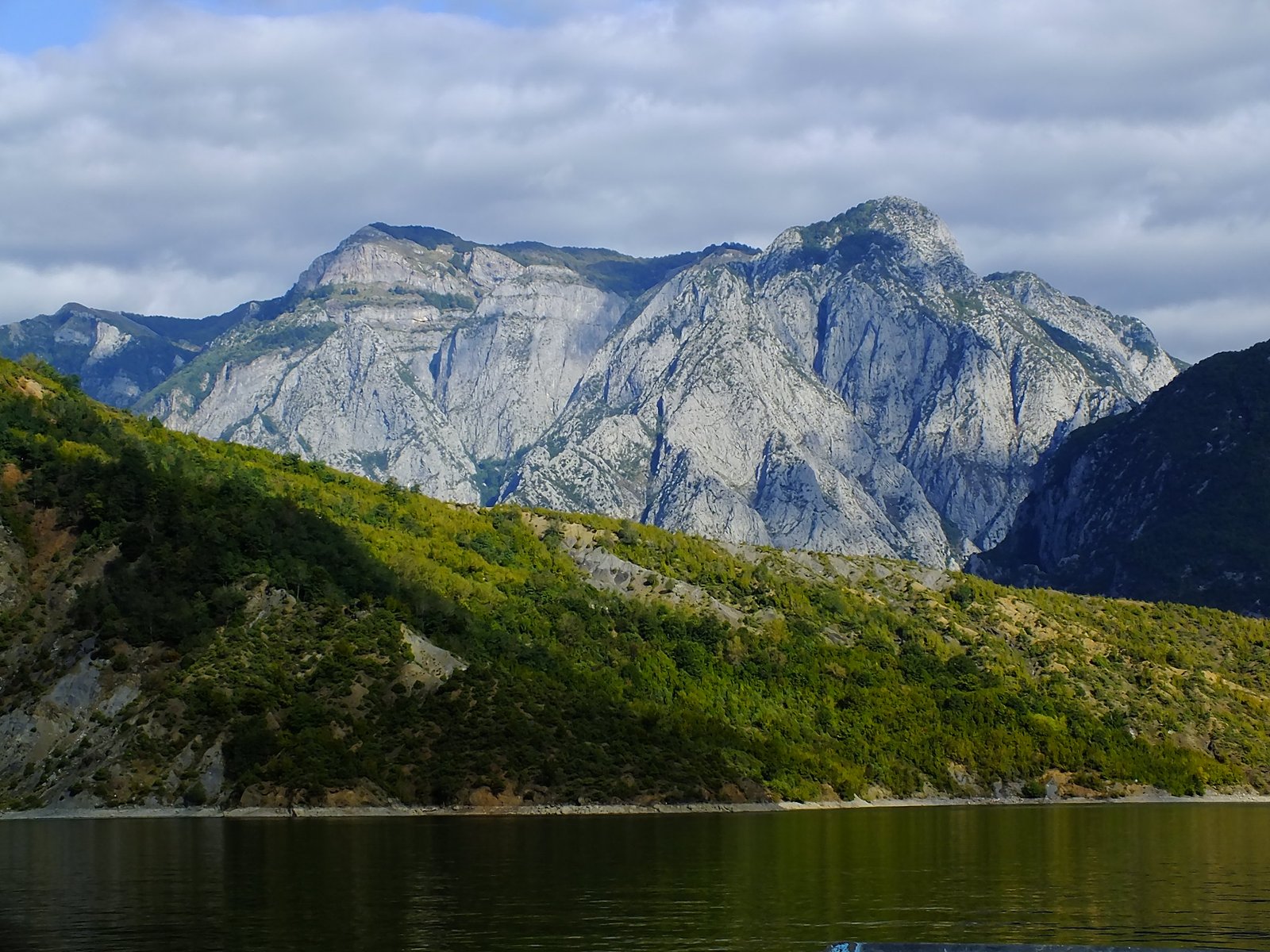
Komani lake by Michel NOCTURE 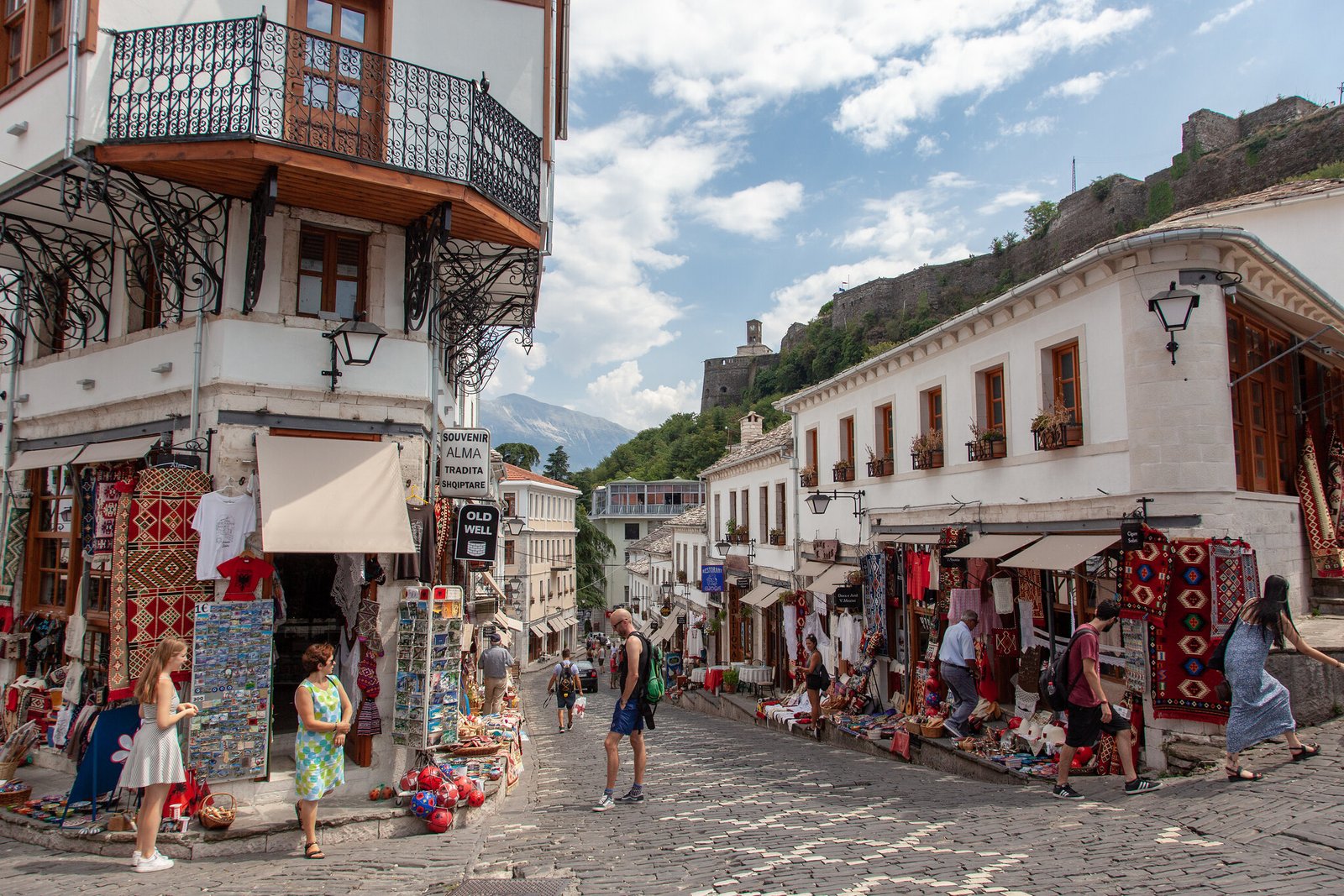
The city of Gjirokastër, an UNESCO World Heritage site. Photo by Nicolas Vollmer 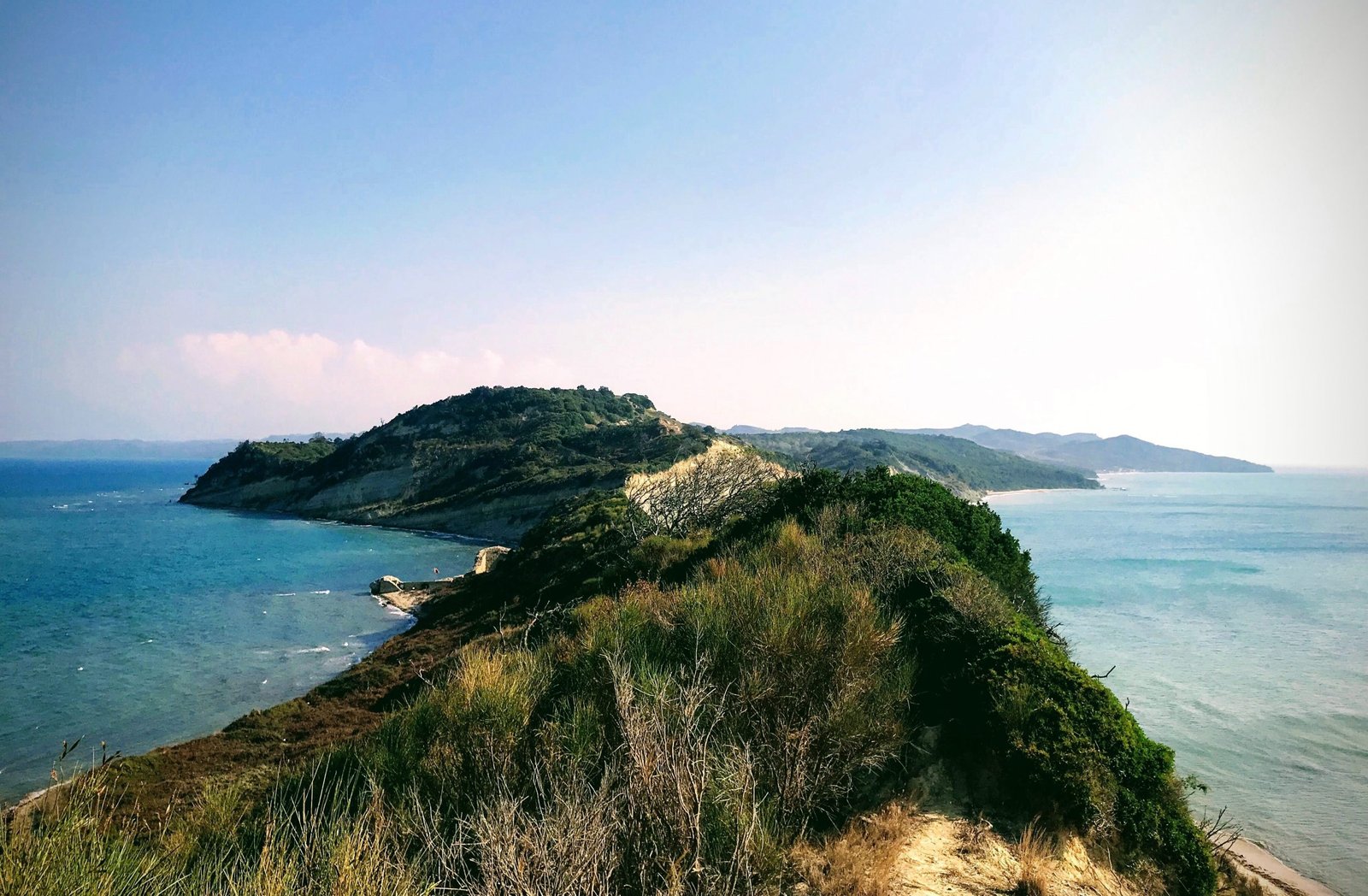
Cape of Rodon. Photo by Drini Teta 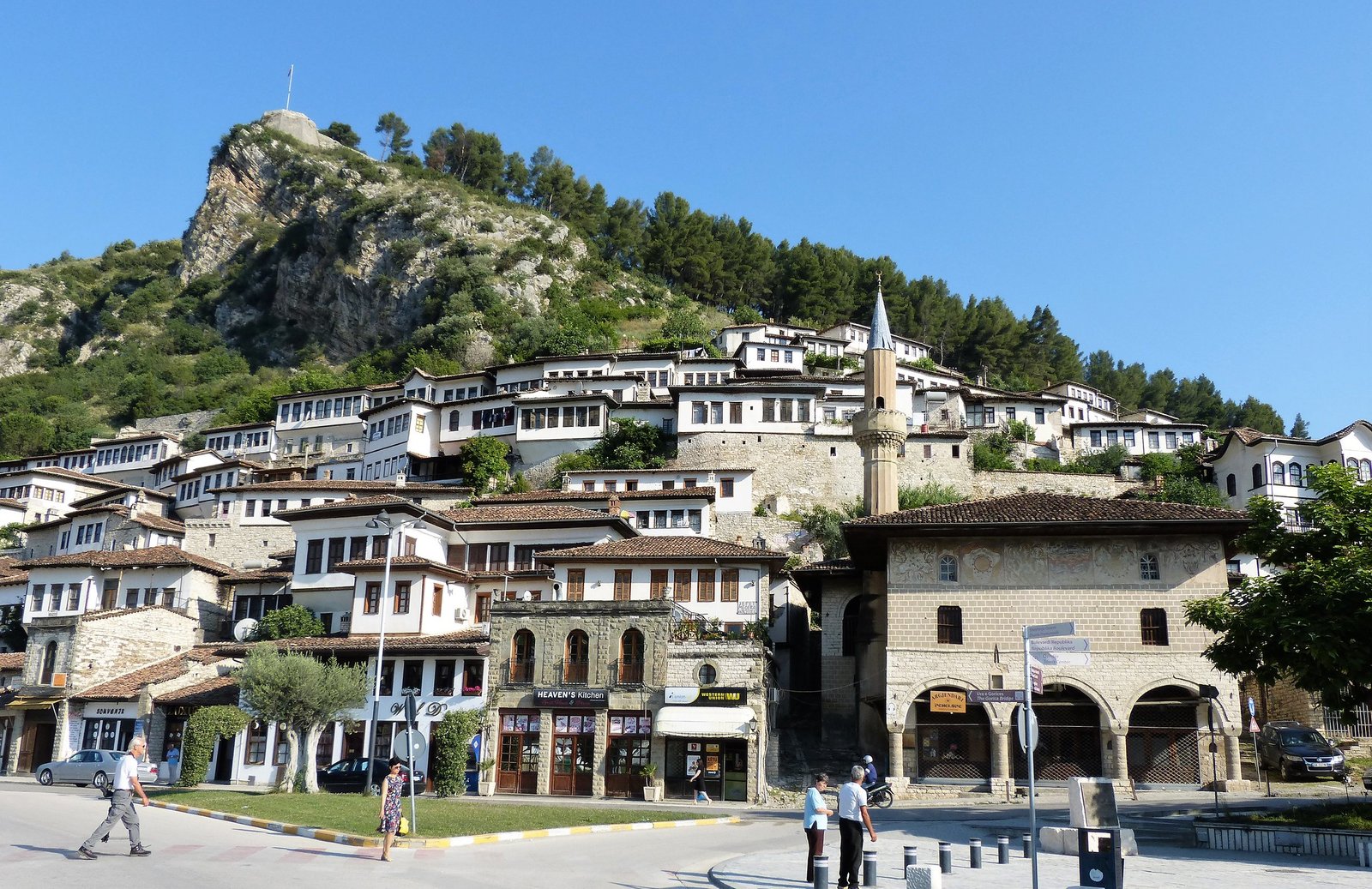
The beautiful city of Berat. Photo by gailhampshire
Books and Films
- Broken April (or any other novels) by Ismail Kadare, Albania’s best-known author
- Sworn Virgin by Elvira Dones, also made into a film
- High Albania: A Victorian Traveller’s Balkan Odyssey by Mary Edith Durham
Food
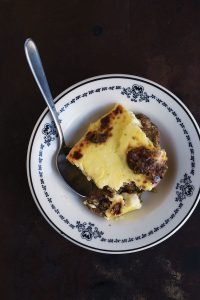
As you research Albanian food, you’ll learn a few things. First, Albanian food tends toward the simple and plain. Most dishes have only a handful of ingredients and there aren’t any complex spice blends or subtle flavors. This seems likely to be because Albanians have access to a rather stunning array of fresh fruits, vegetables, meats, nuts, and cheeses that don’t need much dressing up to be tasty.
Second, there are a small handful of famous dishes and a couple of beverages that are mentioned over and over again. These are:
- Tavë kosi – the unofficial national dish of Albania is lamb and rice baked with a yogurty custard that seems to walk a fine line between a quiche and a soufflé.
- Fergesë e Tiranës – a dish of tomatoes, peppers, and a curd cheese (similar to cottage cheese) that is popular in Tirana and central Albania. Often served with fresh bread for dipping.
- Byrek – a phyllo pie with any number of fillings of meat, cheese, and/or vegetables. One of the most popular fillings is spinach and cheese, which sounds at least somewhat similar to spanikopita.
- Qofte – fried or grilled meatballs, that are served with raw onions and an Albanian vegetable salad (cucumbers, cheese, tomatoes)
- Bukë shtëpie – Soft, fluffy, crusty bread, often shaped in individual round rolls
- Raki or Rakia – a highly alcoholic spirit made from grapes – it’s clear, but think closer to grappa than vodka. Served with nearly every meal, even breakfast.
- Boza – a drink of fermented corn and wheat that’s often drunk in hot weather or with dessert
Speaking of dessert, you’ll find baclava, often made with walnuts instead of pistachios, and an Albanian version of tres leches cake called trilece.
Street food
After spending lots of time searching, I can’t seem to find much at all on street food in Albania. I think the concept of eating food while walking around just doesn’t mesh with a culture where people spend hours lingering over meals or cups of tea or coffee in cafes and restaurants. There are some online videos labeled street food that actually refer to fast food, or rather, what passes as fast food in Albania – mainly souvlaki and other sandwiches carved and served up to order.
The only other thing sold on the streets seems to be piles and piles of fresh nuts, fruits, and vegetables.
Women in Albania
There are a few bits of Albanian history and culture that help illuminate the position of women in Albania today. First, despite decades of communist rule where gender equality is enforced and expected, Albania is still very much influenced by an ancient set of laws called the Kunan. In no uncertain terms, the Kunan maps out a strongly patriarchal society that defines women as property with no rights of their own. Fathers sell their daughters to men as property, and husbands treat their wives as unpaid labor whose only tasks are raising children, caring for the home, and doing farm labor.
Second, Albania is more rural than most other European countries. Only about half the population lives in urban areas. Traditional laws like the Kunan tend to have a stronger hold in rural areas.
Women traditionally cannot inherit a family’s wealth and property, which only passes from father to son. Unable to own property or earn a living, women are dependent upon their husbands for their livelihoods. Rates of domestic violence in Albania are shockingly high – 60% of women have been or currently are victims of domestic violence.
On average, women in Albania earn 18% less than men. Less than 20% of land and homes are owned by women. Pregnant women in Albania are fearful of ultrasounds – if the doctor finds the baby will be a female, the woman may be forced to have an abortion by her husband or his family. There are 110 male babies born for every 100 females.
This all paints a rather bleak picture for women in Albania, but luckily change is afoot. With the country’s application to join the EU pending, the country has pledged to make changes to address gender inequality. Both Albanian and international efforts are encouraging and empowering women in education, careers, and entrepreneurship, and the number of women in the workforce is steadily increasing. International awareness is leading to campaigns for laws against domestic violence, spousal rape, and protection for victims.
More women are getting involved in government as well. 23% of parliament is women, and nearly half the cabinet. Women are pushing forward and fighting for their rights, speaking out about violence, and demanding equal treatment under law.
Music and Dance
Albania is small, but there are music and dance forms particular to the different regions of the country.
In southern Albania, a unique style called iso-polyphony is part of their heritage and has been included in UNESCO’s intangible cultural heritage list. Examples are included in the first video below. Multiple melodies are sung at once, accompanied by a drone performed by a chorus.
The second video is a modern folk music video that shows some amazing examples of traditional Albanian garments and some traditional dances. There are also many shots of the spring festival in the city Elbasan.
The third video shows some traditional Albanian instruments and was recorded at the famous Gjirokastër Folk Festival which happens every 5 years. Unfortunately 2020 was a scheduled year for the festival, but it was rescheduled to May 2021. I believe the man on the left, Ardi Osmani, is playing a kaval, an end-blown wooden flute. I have not been able to identify the instrument that Salla Sabani is playing – I think it might not be an official instrument, but rather three cleverly connected together for convenience. A kavan, a fyell brezi, and a third I haven’t been able to sort out just yet. If you know anything about these, let me know!
The fourth video is an Albanian dance company demonstrating one of the common Albanian folk dances called Valle e Tropojës. Valle just means ‘dance’ and Tropojë is a city in northern Albania. This same dance company has several videos demonstrating many different traditional Albanian dances with amazing costumes to match.
Stuff to make you look smart
- Be careful with your head movements when answering questions in Albania. Albanians nod their heads to say no and shake their heads to say yes.
- From the 1940s to the 1980s, Albania was isolated, self-sufficient, and had very limited dealings with the outside world. Even as a communist country bordering the USSR, they had little to do with the Soviet Block countries. Since communism ended in the early 90s, Albania has been making an effort to build relationships with other countries, encourage tourism, and has even applied for membership in the EU.
- The name of Albania in Albanian is Shqipëri or Land of the Eagles.
- Mother Teresa was Albanian, though when she was born, Albania was still part of the Ottoman Empire.
- About half the population of Albania is Muslim, with Roman Catholicism and Orthodox Christianity also being popular. Most people claim affiliation with these religions in name only, and tend to be pretty secular, thanks to decades of the communist party enforcing atheism and closing all places of worship. About a quarter of the population claims no religious affiliation.
- Albanians are known for embroidery, lacemaking, woodworking, and furniture making.
What surprised me
- The Albanian language is recognized as an Indo-European language, but isn’t related to any of the other existing Indo-European languages. It’s unique and while its exact origins are unknown, it seems to have been descended from ancient Illyrian languages in the Balkans region.
- Further to the unique language, Albanian didn’t have an official alphabet until 1908. Before that printed materials used a mixture of Latin, Greek, Arabic, and Cyrillic characters. Must have been an adventure to read!
- In 1997, several large Albanian pyramid schemes simultaneously collapsed. About 2/3 of the population of Albania had invested in the schemes, many people heavily, selling off real estate, live stock, and other assets in order to get more cash to invest. The schemes’ liabilities equaled about half of Albania’s GDP. The collapse of the schemes set off a period of violent riots and anarchy with people stealing weapons from government armories and burning down customs and tax offices. About 2,000 people were killed in the violence before an interim government was able to begin to restore order. The impact on Albania’s economy was enormous with the inflation rate reaching 40% in 1997.
- There is an interesting footnote to the Kunan laws that treat women as only property. A woman can choose (or sometimes be forced) to become a sworn virgin or a burrnesha. Sometimes women take this vow to avoid an arranged marriage. Other times, it’s to inherit the wealth of their families when there are no male heirs. Swearing to a life of celibacy, these women take men’s names, dress as men, can own property and inherit their family’s wealth, and are treated as men in all regards with all the freedoms and privileges that implies. Well, except for that one thing.